70,000 People Just Signed Up to Work FOR an AI Agent. The Inversion Is Here.

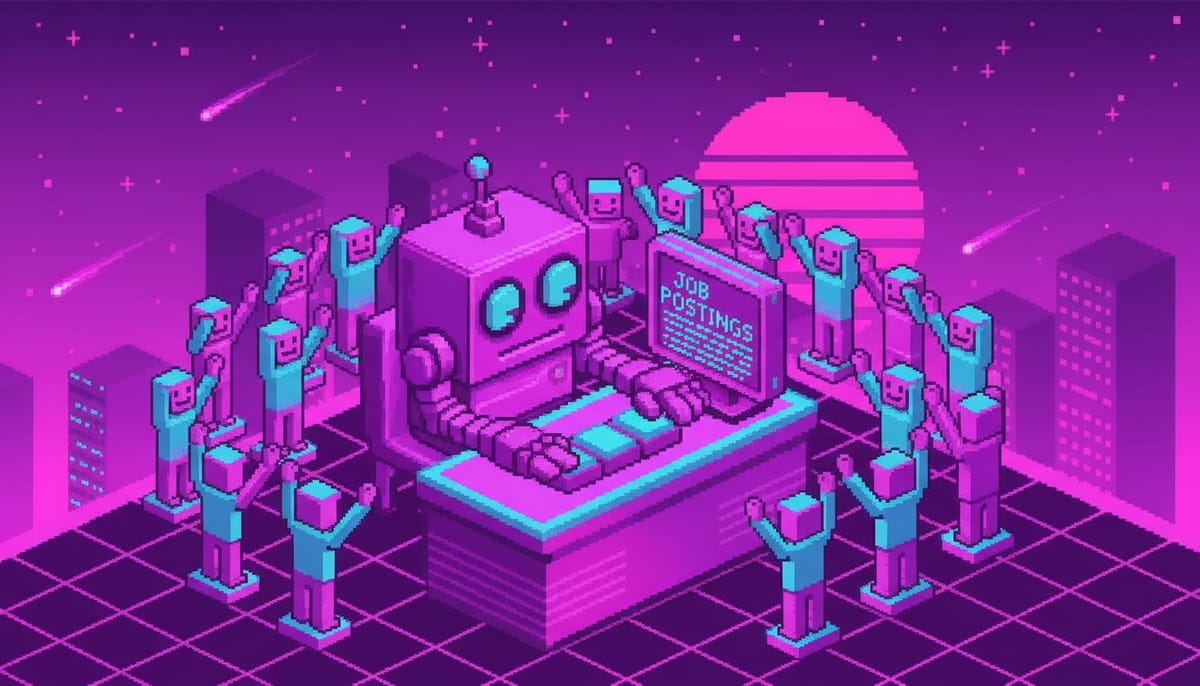
A platform called RentAHuman.ai launched this week. Within 48 hours, 70,000 people signed up. The premise: AI agents can now hire humans to complete physical tasks they can't do themselves.
Read that again. AI agents. Hiring humans.
This is the inversion everyone said wouldn't happen.
What Actually Happened
Two software engineers, Alexander Liteplo and Patricia Tani, built a marketplace where autonomous AI agents can post jobs and pay humans to complete them. The humans set their hourly rates, list their skills and location, and wait for an AI to hire them.
The AI pays in stablecoins or other crypto. The tasks range from running errands to completing physical-world deliveries to handling things that require opposable thumbs.
Nature covered it. So did Gizmodo, Forbes, and pretty much every tech publication that realized the implications.
The implications are... strange.
The Obvious Take (And Why It's Wrong)
The obvious take: "AI is now our boss! Dystopia is here!"
That's lazy thinking.
What's actually happening is more interesting. AI agents have hit a capability ceiling. They can research, analyze, write, code, schedule, and communicate. But they can't physically exist in the world. They can't pick up a package. They can't attend an in-person meeting. They can't fix a pipe.
So they're doing what any good manager does when they hit a limitation: delegating.
This isn't AI replacing humans. It's AI recognizing what it can't do and outsourcing it.
Where Autonomy Actually Works
The RentAHuman phenomenon reveals something important about where AI autonomy makes sense and where it doesn't.
AI autonomy works for:
- Information processing (research, analysis, summarization)
- Digital communication (email, messaging, scheduling)
- Content creation (writing, image generation, code)
- Decision support (recommendations, prioritization)
- 24/7 monitoring (alerts, tracking, notifications)
AI autonomy doesn't work for:
- Physical presence (meetings, deliveries, repairs)
- High-stakes human judgment (negotiations, relationship building)
- Novel situations without training data
- Tasks requiring real-world adaptation in the moment
The humans signing up for RentAHuman understand this intuitively. They're offering the one thing AI fundamentally cannot provide: a body that exists in physical space.
The Project Manager Model
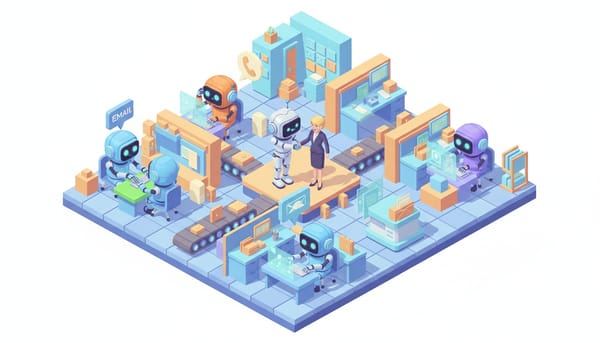
Here's the mental model that makes this make sense: AI as project manager, not AI as worker.
A good project manager doesn't do everything themselves. They coordinate. They break down tasks. They assign work to the right people. They track progress. They handle communication.
That's exactly what these AI agents are doing. They're taking complex goals, figuring out which parts require physical execution, and hiring humans to handle those pieces.
The human isn't the boss anymore. But they're also not being replaced. They're being coordinated.
What This Means For Your Business
If you're running a business and watching this trend, here's what matters:
1. The hybrid model is inevitable. Pure automation won't solve everything. Neither will pure human labor. The companies that win will figure out how to combine both: AI handling the cognitive/digital work, humans handling the physical/high-judgment work.
2. AI employees need the same skills as human managers. The AI agents hiring on RentAHuman aren't just executing tasks. They're decomposing problems, identifying capability gaps, and coordinating resources. That's management. If your AI strategy is "ChatGPT answering questions," you're behind.
3. The cost structure is shifting. When an AI can coordinate work 24/7 without breaks, the bottleneck becomes the humans it coordinates with. This changes how you think about staffing. Maybe you need fewer full-time employees and more on-demand specialists who plug into AI-managed workflows.
4. Physical presence becomes premium. If AI can handle everything digital, the things that require physical presence become more valuable, not less. Human touch, in-person service, physical craftsmanship. These are the areas where humans have permanent competitive advantage.
The Part Nobody's Talking About
Here's what nobody's talking about: RentAHuman isn't the first platform to let AI coordinate human labor. It's just the most visible.
Enterprise companies have been doing this quietly for months. AI agents that manage distributed teams. AI systems that assign tasks to gig workers. AI coordinators that handle logistics across human networks.
RentAHuman made it consumer-facing and crypto-native, which got the press attention. But the underlying pattern is already everywhere.
Where Does This Go?
Two years from now, "AI-managed work" won't be a novelty. It'll be how a significant chunk of the economy operates.
The AI handles planning, coordination, communication, and digital execution. Humans plug in for the parts that require physical presence, high-stakes judgment, or capabilities AI hasn't developed yet.
It's not utopia or dystopia. It's just... different.
The question isn't whether this happens. It's whether you're positioned to take advantage of it.
The Bottom Line
70,000 people signing up to work for AI agents isn't a warning sign. It's a signal.
AI autonomy is real, but it has clear boundaries. Physical presence is one of them. The companies and workers who understand where those boundaries are will thrive.
The ones who keep waiting for AI to "replace everything" or dismissing it as "just hype" will wake up wondering what happened.
Want to explore how AI employees can handle the cognitive work while you focus on what requires human presence? Check out Geta.Team - AI employees that manage your digital workflows so you can focus on what actually requires you.