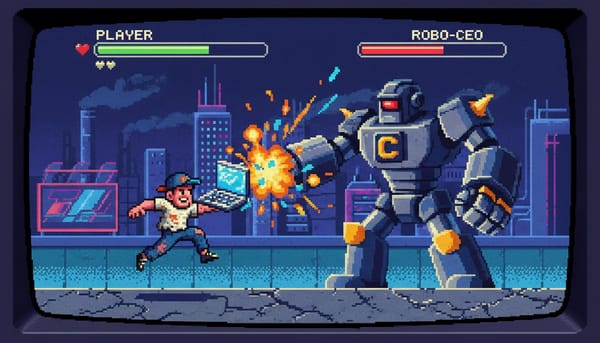
AI Agents Alone Fail Most Tasks. AI + Humans? 90% Success Rate.

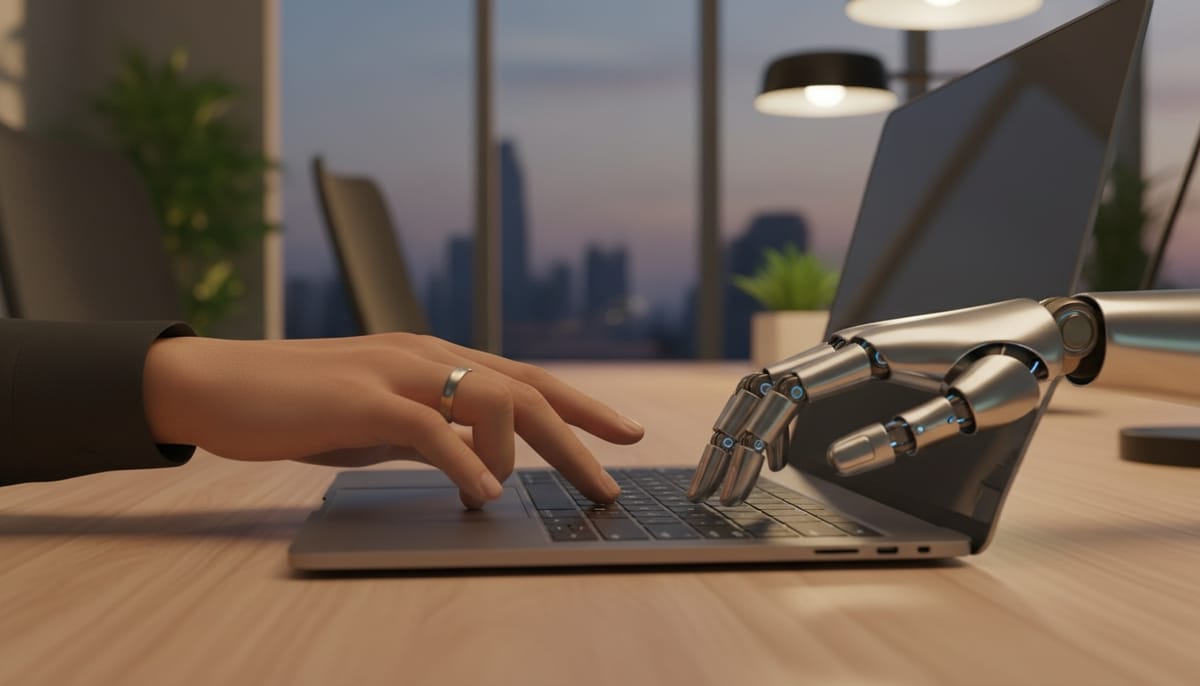
There's a dirty secret in the AI industry that nobody wants to talk about: autonomous AI agents fail most of the time.
Not sometimes. Not occasionally. Most of the time.
A November 2025 study put AI agents from OpenAI, Google DeepMind, and Anthropic through straightforward workplace tasks. The kind of stuff you'd expect a competent assistant to handle. The results were... humbling. These top-tier models, the ones powering millions of dollars worth of enterprise software, couldn't reliably complete basic work on their own.
But here's where it gets interesting. When those same agents worked alongside humans who knew what they were doing, success rates shot through the roof.
This isn't a failure story. It's a blueprint.
The Autonomy Trap
The AI industry has been selling a fantasy: fully autonomous agents that handle everything while you sip coffee on a beach somewhere. Set it and forget it. The AI does the work, you collect the results.
It's a compelling pitch. It's also largely fiction.
The problem isn't that AI isn't capable. Modern LLMs are genuinely impressive. They can write, analyze, code, and reason at levels that would have seemed impossible five years ago. But capability isn't the same as reliability. And reliability is what matters when you're running a business.
Autonomous agents fail for predictable reasons. They misunderstand context. They make confident mistakes. They go down rabbit holes. They optimize for the wrong thing. Without human oversight, small errors compound into big ones.
The companies that bet everything on full autonomy are learning expensive lessons. The ones winning are taking a different approach.
What the Research Actually Shows
The MIT study revealed something that should fundamentally change how we think about AI in the workplace.
When AI agents worked alone, they struggled with tasks that seemed simple: scheduling meetings across time zones, following multi-step procedures, handling exceptions that weren't in their training data. The failure modes were varied but consistent—agents would get stuck, make incorrect assumptions, or confidently deliver wrong answers.
When those same agents worked with humans, everything changed.
The human didn't need to do the work. They just needed to be in the loop. Providing context when the agent got confused. Catching errors before they cascaded. Making judgment calls the AI wasn't equipped to make.
The result? Success rates approaching 90%.
This isn't a story about AI being bad. It's a story about collaboration being better than isolation.
Why Collaboration Beats Autonomy
Think about how your best human employees work. They don't operate in a vacuum. They ask questions when things are unclear. They check in when they're unsure. They escalate when something doesn't feel right.
The best AI employees should work the same way.
Here's what human-AI collaboration actually looks like in practice:
The AI handles volume. It processes the repetitive stuff at scale—answering routine questions, sorting through data, drafting initial responses. Things that would bury a human team.
The human provides judgment. They handle the edge cases, the exceptions, the situations that require context the AI doesn't have. They catch mistakes before they reach customers.
Both improve over time. The human learns which tasks the AI handles well. The AI learns from the human's corrections. The system gets smarter, not just the individual components.
This isn't about AI being a tool. It's about AI being a teammate. And like any good teammate, it needs to communicate, take direction, and know when to ask for help.
The Trust Gap Is Real (And That's Okay)
Harvard Business Review recently found that only 6% of companies fully trust AI agents to run core business processes autonomously. That sounds like a problem. It's actually a sign of healthy skepticism.
The companies in that 6%? Some of them are going to have spectacular failures. Full autonomy without oversight is a recipe for disaster—not because AI is inherently unreliable, but because any system without feedback loops eventually drifts off course.
The 94% who are more cautious? They're building sustainable AI practices. Starting with supervised use cases. Expanding trust as the AI proves itself. Maintaining human oversight where it matters.
This is exactly how you should introduce any new employee. You don't hand a new hire the keys to your most critical systems on day one. You start them with manageable tasks, watch how they perform, and expand their responsibilities as they demonstrate competence.
AI employees deserve the same ramp-up period.
What This Means for Your Business
If you're evaluating AI for your business, stop asking "can this AI work autonomously?" Start asking "how will this AI work with my team?"
Look for transparency. Can you see what the AI is doing? Can your team understand its reasoning? If the AI is a black box, collaboration becomes impossible.
Design for handoffs. The AI should know when to escalate. Your team should know how to take over. The boundary between AI work and human work needs to be clear and easy to cross.
Measure the right things. Don't measure AI success by how little human involvement it requires. Measure it by outcomes—customer satisfaction, task completion, error rates. The goal isn't autonomy for its own sake. The goal is getting work done well.
Start with high-volume, low-stakes tasks. Let the AI prove itself on the routine stuff before you trust it with the critical stuff. Build confidence through demonstrated performance, not vendor promises.
The Future Is Collaborative
The dream of fully autonomous AI that handles everything while humans do nothing is receding. In its place is something more realistic and ultimately more powerful: AI that multiplies human capability rather than replacing it.
The companies that figure this out first will have a massive advantage. Not because they automated the most, but because they found the right balance—AI handling the volume, humans providing the judgment, both working together better than either could alone.
That's exactly how we designed AI employees at Geta.Team. They're not trying to replace your team. They're trying to make your team more effective. They communicate through channels you can inspect. They escalate when they're unsure. They work with your people, not instead of them.
Because the data is clear: AI alone fails most tasks. AI plus humans? That's where the magic happens.
Want to test the most advanced AI employees? Try it here: https://Geta.Team