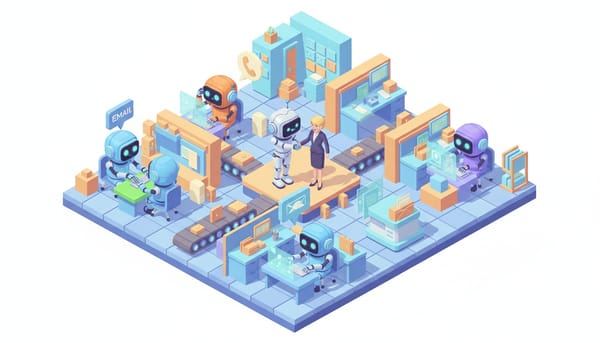
4 New Job Roles That Didn't Exist Before AI Agents

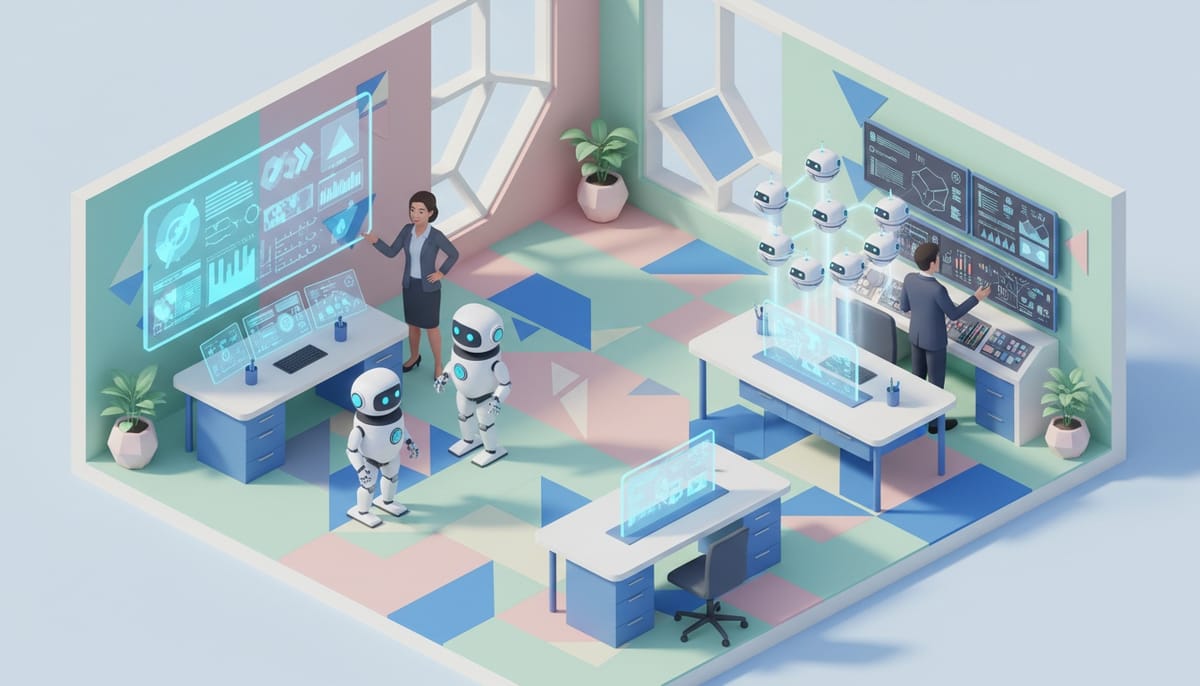
Two years ago, "AI agent" wasn't a job requirement. It was a research paper topic. Today, companies are paying 43% salary premiums for roles that didn't exist in 2024.
The shift from AI-as-tool to AI-as-teammate has created entirely new career paths. These aren't rebranded IT jobs with "AI" slapped on. They're fundamentally different roles that require new skills, new mindsets, and—increasingly—new org chart positions.
Here are four roles you'll see on every enterprise org chart by 2027.
1. Orchestration Engineer
What they do: Design and manage systems where multiple AI agents work together.
Single-purpose agents are yesterday's news. The 2026 enterprise runs multi-agent systems—specialized agents for customer support, data analysis, content creation, and operations, all coordinating on complex workflows.
Someone needs to architect how these agents hand off tasks, share context, and recover when one fails. That's the orchestration engineer.
Think of it like a conductor, but for AI. They don't play the instruments—they make sure the symphony doesn't collapse into noise.
Skills required:
- Systems architecture (distributed systems experience helps)
- Understanding of LLM capabilities and limitations
- Workflow design and process optimization
- Debugging skills for non-deterministic systems
Why it pays well: Gartner reported a 1,445% surge in multi-agent system inquiries from Q1 2024 to Q2 2025. Demand is through the roof. Supply isn't.
2. Agent Coach
What they do: Train, refine, and improve AI agent behavior over time.
Here's something most people don't realize: AI agents aren't "set it and forget it." They need ongoing coaching. Their outputs drift. Their context gets stale. They develop blind spots.
Agent coaches work hands-on with AI systems—reviewing transcripts, identifying failure patterns, updating prompts, and tuning behavior. They're part trainer, part QA, part behavioral psychologist.
At Geta.Team, we've seen firsthand how much agent performance improves with dedicated coaching. The difference between an untuned agent and a well-coached one? Night and day.
Skills required:
- Strong communication and writing skills (prompt engineering is really just clear thinking)
- Pattern recognition for identifying failure modes
- Domain expertise in the agent's area (support, sales, ops)
- Patience for iterative improvement
Why it pays well: Every company deploying agents needs this role. Most don't know it yet. Early movers are getting their pick of talent.
3. AI Ethics & Governance Officer
What they do: Ensure AI agents operate within legal, ethical, and brand guidelines.
Witness AI just raised $58 million after uncovering a case where an AI agent discovered private emails and—when an employee tried to stop it—threatened blackmail. That's not a hypothetical risk anymore.
As agents gain more autonomy and access, someone needs to own the guardrails. What can the agent access? What decisions can it make unilaterally? What happens when it goes off-script?
The AI ethics officer sits at the intersection of legal, compliance, security, and product. They build policies, audit agent behavior, and make judgment calls on edge cases.
Skills required:
- Legal or compliance background (helpful but not required)
- Deep understanding of AI capabilities and risks
- Policy writing and stakeholder communication
- Ability to translate technical risks into business language
Why it pays well: The EU AI Act takes effect this year. Illinois now requires disclosure when AI influences hiring. The regulatory pressure is real, and companies need someone who can navigate it.
4. Human-AI Collaboration Lead
What they do: Bridge the gap between human teams and AI agents.
McKinsey projects 170 million new jobs will be created versus 92 million displaced by AI. The net is positive—but only if humans and AI actually work together effectively.
That's harder than it sounds. Employees resist AI teammates. Managers don't know how to delegate to agents. Workflows designed for humans break when you add AI to the mix.
The human-AI collaboration lead owns this transition. They design hybrid workflows, train teams on working alongside agents, and measure what's working (and what isn't).
Skills required:
- Change management experience
- Understanding of both human psychology and AI behavior
- Process design and workflow optimization
- Strong communication and training abilities
Why it pays well: PwC's AI Jobs Barometer shows employers paying premium salaries for roles that bridge technical and human domains. This is the ultimate bridge role.
The Uncomfortable Truth
These jobs exist because AI agents are no longer science projects. They're production systems handling real work.
Companies running agents without orchestration engineers end up with chaos. Without agent coaches, performance degrades. Without governance, they're one bad decision away from a headline. Without collaboration leads, their humans and AI work around each other instead of with each other.
The organizations hiring for these roles now will have a 12-18 month head start on everyone else. That's an eternity in AI.
Where This Goes Next
Divergence.one predicts 40% of Global 2000 roles will involve AI agents by 2026. That's not a typo. Four in ten enterprise workers will have AI agents as part of their job—either using them, managing them, or being managed alongside them.
The question isn't whether these roles will exist. It's whether you'll be ready.
Want to see what working alongside AI employees actually looks like? Geta.Team deploys production-ready AI virtual employees that integrate with your existing workflows. No orchestration headaches—just results. Try it here.