AI Agents Are Eating SaaS. Here's What Gets Replaced First.

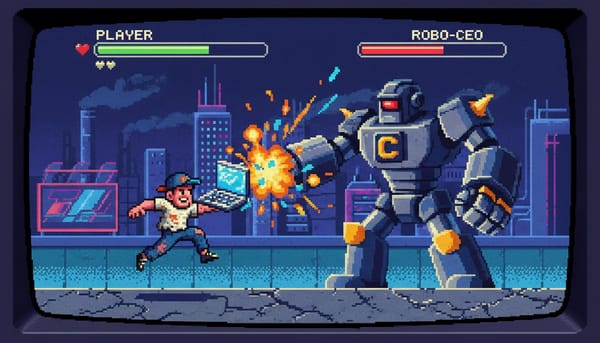
Every SaaS founder's nightmare used to be a well-funded competitor launching a better version of their product. In 2026, the threat isn't another startup. It's a marketing manager who described what she needed in plain English and had an AI agent build it over lunch.
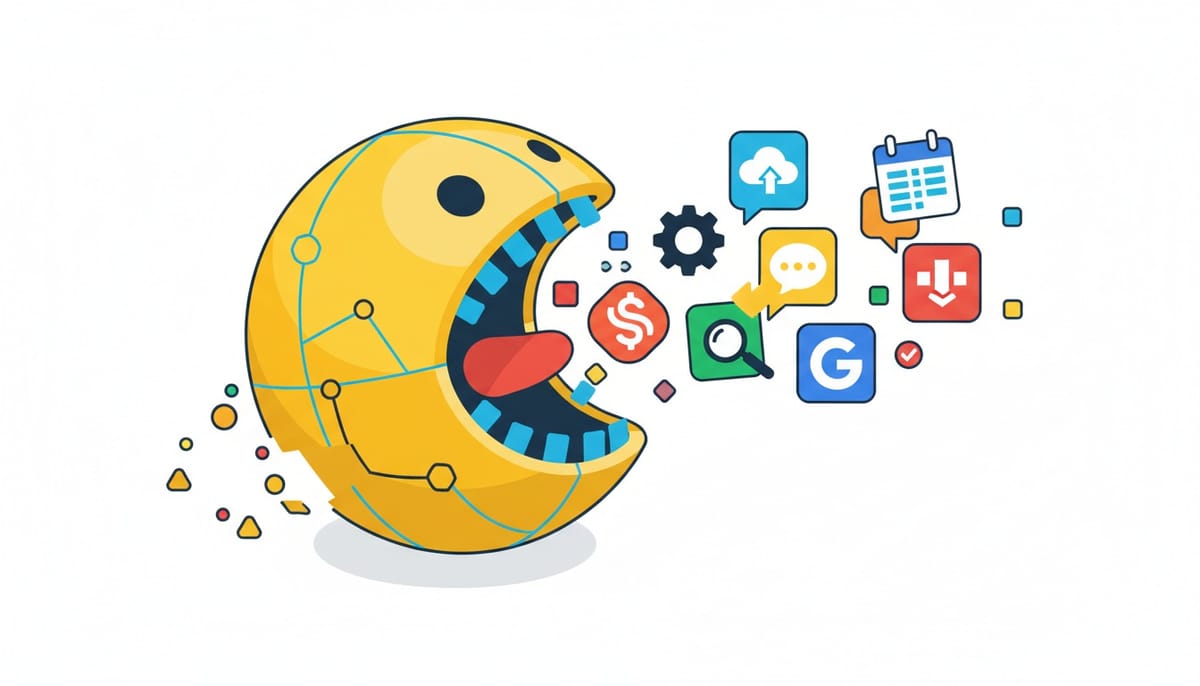
The SaaS model -- sell software subscriptions that help humans do work -- survived cloud migration, survived mobile, survived the first wave of AI chatbots. But agentic AI is different. It doesn't make your SaaS product better. It makes your SaaS product unnecessary.
The Numbers Nobody Wants to Talk About
Bain & Company published a report asking the question directly: will agentic AI disrupt SaaS? Their answer was measured but clear -- the disruption is already underway.
Constellation Research goes further, predicting that 40% of enterprise software will be built using natural-language-driven "vibe coding" in 2026. Not by engineers. By business users who don't know what an API is and don't need to.
Satya Nadella has been saying it out loud: agentic AI could upend the SaaS model entirely. When Microsoft's CEO is warning about the thing his company sells, you should probably pay attention.
And the adoption data backs it up. Databricks just reported a 327% surge in multi-agent workflow adoption. 57% of organizations now deploy multi-step agent workflows. These aren't experiments anymore -- they're replacing production software.
What Gets Eaten First
Not all SaaS is equally vulnerable. The categories most at risk share three traits: they automate simple workflows, they sit between humans and data, and they charge subscription fees for what amounts to structured CRUD operations.
Tier 1 customer support platforms. If your product routes tickets and suggests canned responses, an AI agent does this natively. Intercom's basic tier, Zendesk's routing layer, Freshdesk's auto-assignment -- all replicable by an agent with access to your knowledge base. Gartner predicts conversational AI will cut contact center labor costs by $80 billion by end of 2026. The platforms that merely organized human support work are the first casualties.
Invoice processing and expense management. Tipalti, Brex, Ramp -- the parts of these platforms that handle receipt scanning, categorization, and approval routing are exactly the kind of structured, rule-based workflows that agents handle in their sleep. Danfoss already cut order processing from 42 hours to minutes using AI agents.
Time tracking and project management. The "update your status" and "log your hours" layer of tools like Monday.com or Harvest is administrative overhead that agents eliminate entirely. When an AI employee manages your tasks autonomously, the tool that tracked human task management becomes redundant.
Basic CRM data entry. The grunt work layer of Salesforce -- logging calls, updating deal stages, sending follow-up sequences -- is exactly what AI sales agents already do. The CRM becomes the database, not the workflow.
Social media scheduling. Buffer, Hootsuite, Later -- tools that let humans schedule posts at optimal times. An AI marketing agent doesn't need a scheduling UI. It just posts.
What's (Probably) Safe
The pattern is clear: infrastructure SaaS survives, workflow SaaS gets eaten.
Payment processing. You're not replacing Stripe with an AI agent. The compliance requirements, banking relationships, fraud detection systems, and five-9s uptime expectations create a moat that no agent can replicate with a prompt.
Security and compliance platforms. CrowdStrike, Okta, Datadog -- these require deep infrastructure integration, real-time monitoring at scale, and regulatory certification. Agents might use these platforms, but they won't replace them.
Developer infrastructure. GitHub, Vercel, AWS -- the platforms agents are built on obviously aren't getting replaced by agents. If anything, their usage increases.
Domain-specific vertical platforms. Epic (healthcare), Procore (construction), Veeva (pharma) -- these encode decades of industry-specific regulatory knowledge. An agent can't vibe-code HIPAA compliance.
The Build vs. Buy Equation Just Flipped
Here's the structural shift that should terrify SaaS vendors: for the first time in history, building custom software is cheaper and faster than buying a subscription.
A mid-level employee with access to an AI agent can describe a workflow in natural language and have a working automation in minutes. No procurement process. No vendor evaluation. No annual contract negotiation. No implementation consultant.
The SaaS model depended on a simple economic truth: it was cheaper to buy than to build. AI agents have inverted that equation for an entire category of software.
This is why "create skills on demand" has become the killer feature in agentic AI platforms. When your AI employee can build its own tools, every SaaS product that merely wraps a database becomes optional.
What SaaS Companies Should Actually Do
The smart ones are already pivoting. There are two paths forward:
Become AI-native infrastructure. Stop selling workflow software to humans and start selling APIs to agents. If your SaaS product has valuable proprietary data, unique integrations, or infrastructure that's hard to replicate, your future customer is an AI agent, not a human clicking a dashboard.
Embed agents, don't fight them. The strongest SaaS companies are adding agentic capabilities directly into their platforms. Salesforce's Agentforce, ServiceNow's AI agents, HubSpot's AI features -- they're trying to become the agent rather than being replaced by one.
The worst strategy? Pretending this isn't happening and adding a chatbot to your existing UI. That's like responding to the iPhone by making your flip phone's screen slightly bigger.
The Honest Take
AI agents won't kill all SaaS. But they will kill lazy SaaS -- the products that exist because building custom software used to be expensive, not because they provide irreplaceable value.
The test is simple: if a reasonably smart person could describe your product's core functionality in two paragraphs, an AI agent can probably build a replacement. If your value comes from proprietary data, deep infrastructure, regulatory expertise, or network effects, you're probably fine.
For businesses buying SaaS, the math has changed. Before signing that next annual contract, ask yourself: could an AI employee do this instead?
Increasingly, the answer is yes.
Want to test the most advanced AI employees? Try it here: https://Geta.Team