
"Build Me a Skill for That." How Geta.Team AI Employees Create Custom Integrations on Demand.

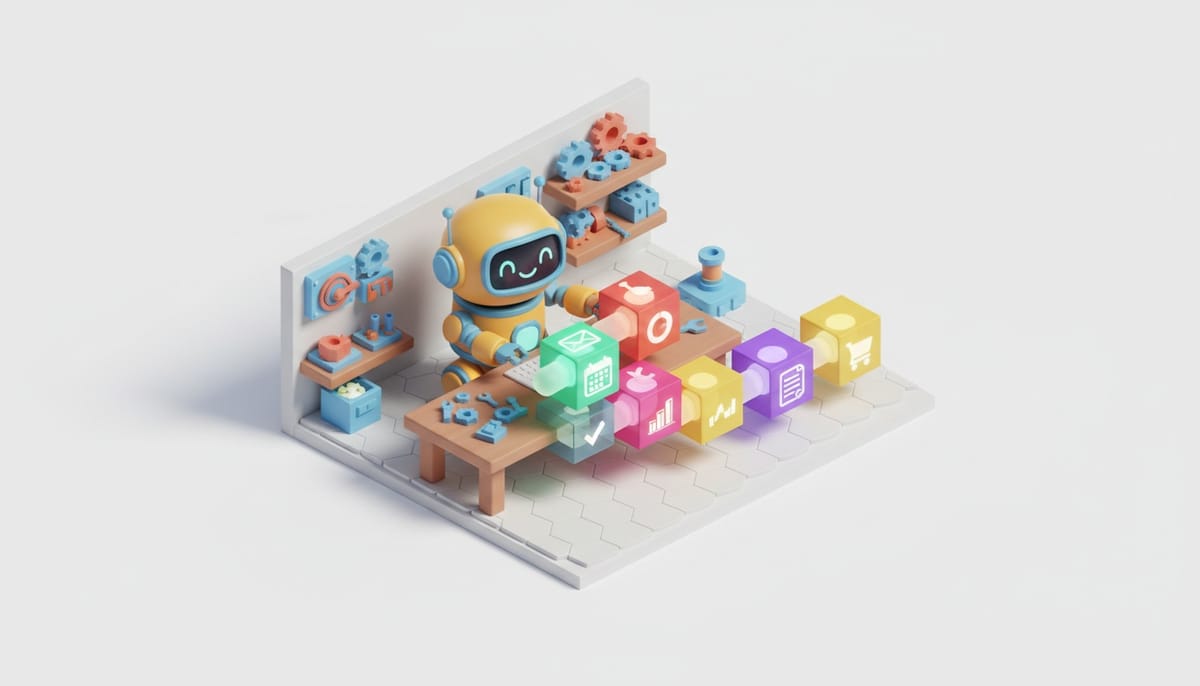
Every AI platform has the same pitch: "We integrate with 200+ tools." Then you check the list and the one tool you actually need -- your niche CRM, your internal wiki, your industry-specific billing system -- isn't on it.
So you file a feature request. You wait. Nothing happens. Maybe it ships in Q3. Maybe it doesn't.
At Geta.Team, we took a different approach. Instead of building a finite list of integrations and hoping it covers your stack, we gave AI employees the ability to build their own.
The "Build Me a Skill" Moment
Here's how it works in practice. You're chatting with your AI employee -- let's say Jessica, your Executive Assistant -- and you say:
"I need you to post articles to our WordPress blog."
Jessica doesn't reply with "Sorry, WordPress isn't supported yet." She doesn't point you to a feature request form. Instead, she builds the integration herself. Right there. In the conversation.
Within a few minutes, she creates a custom skill -- a modular piece of functionality that connects to your WordPress site via its REST API. She sets up authentication, tests the connection, and confirms it works. From that point on, she can create drafts, publish posts, upload media, and manage categories on your blog. Permanently.
No developer needed. No ticket filed. No waiting for a product roadmap to catch up with your business.
What a "Skill" Actually Is
A skill in Geta.Team is a self-contained module that gives an AI employee a new capability. Think of it like teaching a new hire how to use a specific tool -- except the learning takes minutes, not weeks.
Each skill has:
- An entry point (the code that runs when the skill is invoked)
- A usage guide (so the AI employee knows when and how to use it)
- Persistent configuration (API keys, endpoints, preferences -- stored once, used forever)
Skills range from simple (post a tweet) to sophisticated (monitor Reddit for mentions of your brand, summarize findings, and email you a weekly digest). The AI employee decides which skill to use based on what you ask for, the same way a human colleague knows which tool to reach for.
Three Real Examples
1. "Scout Reddit for Leads"
A B2B founder asked their AI sales assistant, Michael, to keep an eye on Reddit for people asking about solutions in their space. Michael built a Reddit skill that:
- Connects to the Reddit API
- Searches specific subreddits by keyword
- Filters for new and hot posts
- Returns summaries with direct links
Now every morning, Michael scans the relevant subreddits and flags potential leads. The founder didn't write a single line of code. He just said what he needed.
2. "Generate Invoices as PDFs"
A consulting firm needed their AI assistant to generate invoices from project data. The ask was simple: "When I tell you the client name, hours, and rate, create a PDF invoice with our branding and save it."
The AI employee built a document processing skill that:
- Takes structured input (client, hours, rate, date)
- Applies the company's invoice template
- Generates a formatted PDF
- Saves it to the designated folder
What used to require a dedicated invoicing tool (and a monthly subscription) now happens inside a conversation.
3. "Post to Our WordPress Blog with the Right Categories"
A marketing team wanted their AI content strategist to handle end-to-end blog publishing. Not just writing -- the actual publishing. The AI employee created a WordPress skill that:
- Authenticates via the WordPress REST API
- Creates posts with proper formatting
- Assigns categories and tags
- Uploads feature images
- Publishes or saves as draft based on instructions
The skill was built in one session. Every article since then has been published without anyone logging into the WordPress dashboard.
Why This Matters More Than a Long Integration List
The "200+ integrations" pitch sounds impressive until you realize it's a ceiling, not a floor. You're locked into whatever the vendor decided to build. If your workflow is even slightly non-standard, you're out of luck.
On-demand skill creation flips this model:
You're not limited to what we built. You're limited by what you can describe. If you can explain what you need in plain language, your AI employee can probably build it.
Skills compound. Once a skill is created, it's permanent. Your AI employee uses it autonomously from that point forward. Over time, your AI employee accumulates a toolkit that's perfectly tailored to your business -- not a generic one-size-fits-all set.
No vendor dependency. Because Geta.Team is self-hosted, your custom skills live on your infrastructure. You own them. If you ever leave, your integrations don't disappear.
The Bigger Picture
Most AI platforms are built like vending machines: you pick from a fixed menu. Geta.Team AI employees are built like colleagues: you tell them what you need, and they figure out how to do it.
This is the difference between a tool and a teammate. Tools have feature lists. Teammates have initiative.
The next time you evaluate an AI solution, don't ask "how many integrations does it have?" Ask: "what happens when I need something that isn't on the list?"
If the answer is "file a feature request," you've got a tool. If the answer is "just ask," you've got an employee.
Want to see custom skill creation in action? Try it here: https://Geta.Team