How to Run a One-Person Business That Looks Like a 10-Person Company

There is a freelancer in London who publishes a blog post every morning, sends 200 personalized cold emails a week, posts to LinkedIn and X daily, responds to customer inquiries within minutes, and delivers weekly analytics reports to her clients.
She has no employees. No VA. No agency. Just herself and five AI employees.
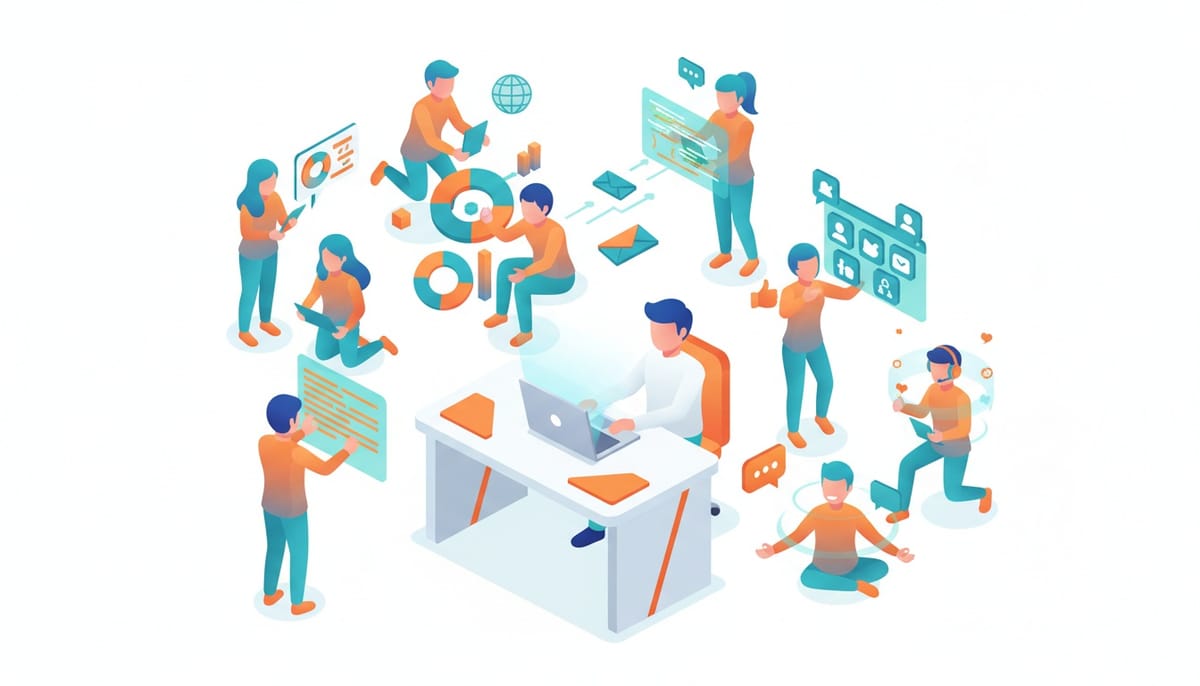
From the outside, her business looks like a team of ten. From the inside, it is one person making decisions while AI handles the execution. This is not a future scenario. This is how a growing number of solo founders and freelancers are operating right now.
Here is the blueprint.
The AI Employees You Actually Need
You do not need twenty AI tools. You need four or five AI employees with clearly defined roles. Think of it like hiring, except there is no onboarding, no payroll, and nobody calls in sick.
The Blog Writer. Publishes content on a schedule without being asked. Researches trending topics in your industry every morning, writes a full article, generates a header image, publishes it to your blog, and posts it to LinkedIn and X. You approve or tweak the draft. That is your only involvement. One article a day, every day, without you writing a single word.
The Outreach Manager. Runs your entire cold email pipeline. You give it a target audience and a value proposition. It researches prospects, writes personalized emails that reference specific details about each company, schedules sending sequences with follow-ups, and tracks who replied. This is not mail merge with a template. Each email reads like it was written by someone who spent ten minutes on the prospect's website, because the AI actually did.
The Executive Assistant. Handles your inbox, your calendar, and your admin overhead. It reads every incoming email, categorizes by priority, drafts replies in your tone, and flags anything that actually needs your attention. It prepares your daily briefing: what meetings are coming up, what deadlines are approaching, what happened overnight. You start each morning knowing exactly what matters.
The Data Analyst. Pulls your numbers and makes them readable. Weekly revenue reports, campaign performance breakdowns, customer metrics, trend analysis. Instead of spending Friday afternoon in spreadsheets, you get a formatted report delivered to your inbox with the key insights already highlighted.
The Customer Support Agent. Answers inquiries, handles FAQs, escalates complex issues to you, and follows up automatically. Your clients get fast responses at 2 AM on a Tuesday. You wake up to a summary of what was handled and what needs your input.
What This Actually Looks Like Day-to-Day
Monday morning. You open your laptop. Your executive assistant has already triaged your inbox. Three emails need your attention, fourteen were handled. Your blog writer published an article at 7 AM and posted it to social media. Your outreach manager sent forty personalized emails yesterday and three people replied, the responses are flagged for you to review.
You spend thirty minutes making decisions: approve a blog draft for tomorrow, reply to two client emails, review the three warm leads from outreach. Then you do the work that actually requires you, client calls, strategy sessions, product development.
That is a Tuesday. And a Wednesday. And every other day.
The trick is not working less. It is spending your time on the things that only you can do, and letting AI handle everything else.
The Math That Makes It Obvious
A junior marketing hire costs $40,000-$60,000 per year. A virtual assistant costs $1,500-$3,000 per month. A freelance content writer charges $200-$500 per article. A cold email agency charges $2,000-$5,000 per month.
Add it all up and you are looking at $100,000+ per year for a small team that covers content, outreach, admin, and support.
An AI employee team covering all four roles costs a fraction of that. And it works 24/7, never takes PTO, and does not need a Slack channel to stay aligned.
The ROI is not even close.
What You Still Need to Do Yourself
AI employees are not magic. They are consistent, fast, and tireless, but they are not you. Here is what stays on your plate:
Strategic decisions. AI can give you data and options. You make the call.
Relationship building. The handshake, the dinner, the trust built over years. That is human territory.
Creative direction. AI executes. You decide what is worth executing.
Crisis management. When something goes sideways, you need judgment, not pattern matching.
Closing deals. AI warms leads and qualifies prospects. You close.
The goal is not to remove yourself from the business. It is to remove yourself from the busywork so you can focus on the parts that actually grow revenue.
How to Set This Up in a Weekend
This is not a six-month project. You can have an AI employee team running by Sunday night.
Saturday morning: Set up your first AI employee. Start with the executive assistant, it has the fastest impact on your daily workflow. Connect your email, define your priorities, and let it start learning your preferences.
Saturday afternoon: Add the blog writer. Define your niche, your target keywords, and your posting schedule. Review the first draft, give feedback, and let it calibrate to your voice.
Sunday morning: Set up outreach. Define your ideal customer profile and your core message. Let the AI research prospects and draft the first batch of emails for your review.
Sunday afternoon: Add support and analytics. Connect your customer channels and your data sources. Set up weekly report schedules.
By Monday morning, you have a team.
The Uncomfortable Truth
The solo founders who are winning right now are not working harder than everyone else. They are not smarter. They do not have more funding.
They figured out something simple: you do not need to hire ten people to run a business that operates like it has ten people. You need to hire AI employees for the nine roles that do not require human judgment, and spend 100% of your own time on the one role that does.
The business that looks like a team of ten? It is one person who stopped doing work that a machine could do better.
Want to build your own AI employee team this weekend? Start here: https://geta.team