
Personal AI Assistants Are Quietly Beating Productivity Apps. Here's What It Means for the Stack You Already Pay For.

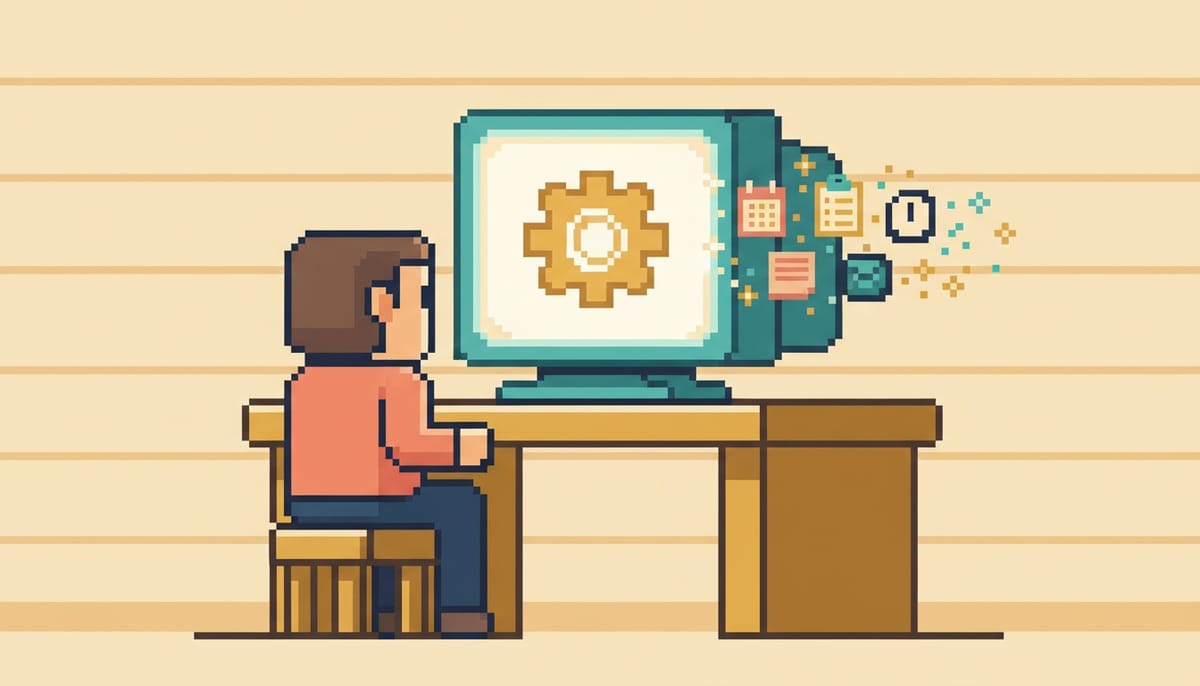
A pattern is showing up in how knowledge workers describe their tool stack lately, and once you notice it you can't stop seeing it. Someone signed up for an AI personal assistant six months ago. Today they cancelled Todoist. Last month they let Calendly lapse. Notion is still installed but they haven't opened it in three weeks. Superhuman is gone. The "AI assistant" they were skeptical about has quietly absorbed four or five recurring SaaS subscriptions, and they only noticed when the bank statement got shorter.
This is not a victory lap for AI. It's the consolidation that productivity software has always been one good interface away from. We've just hit the interface.
What's actually happening to the stack
Look at what a typical knowledge worker pays for monthly. Some combination of: a task manager ($5–15), a calendar tool with scheduling links ($10–20), a note-taking app ($10–20), an inbox enhancer ($30), a contact CRM ($15–25), a transcription/meeting tool ($10–20). That's $80–$130/month for tools that are mostly storage and a UI on top of it. The actual work — deciding what matters, drafting the response, scheduling the thing, following up — is still done by you.
A persistent-memory AI assistant changes the math because she doesn't store data and present it to you. She acts on it. Tasks aren't a list you maintain — they're things she's actively pushing forward. Calendar isn't a grid you stare at — it's a constraint she resolves when she books. Notes aren't a knowledge graph you tend — they're context she already has from being in the meeting with you.
Once that loop is in place, the apps don't get unsubscribed because the AI is "better at them." They get unsubscribed because they're solving the wrong layer of the problem.
Why now and not two years ago
The 2023 wave of AI productivity tools was mostly chat windows next to documents. They were impressive demos and bad daily tools because they had three structural gaps:
Memory. A productivity tool with no memory of yesterday's conversation is a junior intern on day one, every day forever. You spend more energy giving context than you'd spend doing the task.
Channels. A productivity tool you have to open is a productivity tool you forget about. The apps that survive in your workflow (email, Slack, calendar) are ones that show up where you already are.
Action. A productivity tool that suggests but doesn't execute is just a fancier reminder. It doesn't subtract from your queue.
The current wave of AI assistants closes those gaps in roughly that order. Persistent memory means you don't restart the relationship every session. Native channels (her own email address, phone number, Slack/Teams handles) mean she shows up in the inbox you already check, not in a sixth tab. And the move from suggestion to action is what turns "interesting tool" into "I cancelled the other thing."
That third one is the bottleneck for most users right now. It's also why the consolidation feels uneven — some people are 80% of the way there, others are 10%. The difference is mostly trust.
The three things slowing the consolidation down
If your AI assistant could do all of this, why hasn't your CFO friend cancelled Calendly yet?
Channels. Most AI products still don't have their own real identity to operate through. Without an email address external people can write to, without a phone number that can take calls, the assistant can't actually replace the tools that bridge you to the outside world. She can draft your meeting confirmation, but if you have to copy-paste it into Calendly, you've added work, not subtracted it.
Trust. "Reply to this on my behalf" is a different commitment than "draft a reply for me to review." The first cancels Superhuman. The second leaves it installed. Most users escalate trust gradually — first low-stakes drafts, then routine replies, then anything routine that doesn't involve money or commitment. The full consolidation happens when trust is high enough to delegate the action and not just the draft.
Accountability. When your task manager fails, the failure is yours — you forgot. When your AI assistant fails, the failure feels like hers, and you don't know whether to trust her again. Productivity tools were trustworthy precisely because they didn't have judgment. The consolidation requires a new accountability model where you can audit her decisions, see why she did what she did, and roll back when she's wrong. Most platforms are still figuring out how to make that not feel like surveillance.
What this means for your stack right now
If you're paying for productivity SaaS, the practical move isn't to cancel everything tomorrow. It's to pay attention to which tools you've stopped opening since you started using your assistant — those are the candidates. The ones that survive the audit are the ones doing actual work the AI can't yet (specialized data, multi-user collaboration, regulated workflows). The rest are interfaces, and interfaces are the easiest thing to consolidate.
A reasonable order to evaluate, based on what we see customers actually drop first: scheduling tools, inbox enhancers, basic task managers, contact CRMs. The ones that survive longest: domain-specific tools (your CRM if you're in sales, your design tool if you're a designer, your accounting software). The pattern is that the AI assistant absorbs the generic productivity layer first, and the specialized tools persist for now.
For SMB owners, the stack consolidation is the same play scaled up. The $80–$130/month you spend on tools per knowledge worker is real money once you have a team of ten. The savings from collapsing that into a single assistant per person isn't the headline — the savings from not paying that 4–5x SaaS multiplier across the team is.
The thing to actually watch
The interesting question isn't whether AI assistants replace productivity SaaS. They will, and it's underway. The interesting question is which assistants get there first. The answer is going to be the ones that solve the channels-trust-accountability triangle, not the ones with the slickest demo.
That's an architectural bet, not a feature bet. The products that will win are the ones built on persistent memory, real communication channels, and transparent action — not the ones bolting "AI" onto an existing productivity UI.
Most of the tools you're paying for monthly were never going to win this fight. They're just the last generation's interface waiting for the next one to ship.
Want to test the most advanced AI employees? Try it here: https://Geta.Team